How AI Prosumer Tools Are Marketing on TikTok in 2026

Over September 5–12, AI prosumer marketing split into two winning modes: entertainment that makes software culturally legible, and concrete workflows that prove an outcome. The strongest brands sold identities—builder, operator, organized creative—not abstract AI. Creator partnerships worked best when the product solved a personal problem and produced visible proof.
AI Prosumer Marketing Has Moved Beyond “Look What AI Can Do”
The clearest shift this week was from generic capability marketing toward role-based transformation. Brands are not merely promising speed; they are showing what kind of person the user becomes: a nontechnical builder, an unburdened operator, a sharper professional, or an unusually organized creative.
Three distinct strategies emerged:
1. Entertainment-first integration: Gamma, Base44, and organic Claude content make the product part of a joke, workplace story, or insider meme.
2. Outcome-first demonstration: Lovable, Replit, Base44, and Superhuman show a finished app, completed task, or eliminated workflow.
3. Identity and credibility building: Notion profiles real operators; developer tools gain authority through independent technical educators and community culture.
The strongest content generally did not open with a product name or a broad promise about productivity. It opened with a recognizable situation: coordinating friends, choosing lunch, surviving office bureaucracy, processing an email thread, or trying to launch an idea before enthusiasm disappears.
How Individual Brands Are Positioning Themselves
Notion: The Operating System Behind Serious, Tasteful Work
Notion’s current Instagram strategy is less “AI feature demo” and more documentary proof that sophisticated organizations run on Notion. Its restaurant event showed operators identifying a real inspection problem and building an AI-powered readiness copilot during the session.

A second reel positioned Notion as Little Plains’ “information nerve center,” combining founder testimony, polished workplace footage, databases, meeting notes, and agentic workflows.

This gives Notion a distinct position: AI is not a novelty or standalone assistant; it is contextual intelligence embedded in the place where the organization already thinks. The tradeoff is that these polished case studies generated respectable rather than explosive response. Their job appears to be trust and category authority, not mass entertainment.
A separate high-reach TikTok showed Notion inside an aspirational self-improvement routine. The dashboard appeared as infrastructure for becoming “hotter, smarter, and more interesting,” and viewers asked for a Notion tour without being prompted to buy anything.

That is the stronger consumer bridge: Notion as a prop in a desirable life, rather than Notion as the subject of a tutorial.
Lovable: Turn Ideas Into Assets—and Assets Into Income
Lovable is occupying two adjacent territories: entrepreneurial self-efficacy and service-business opportunity.
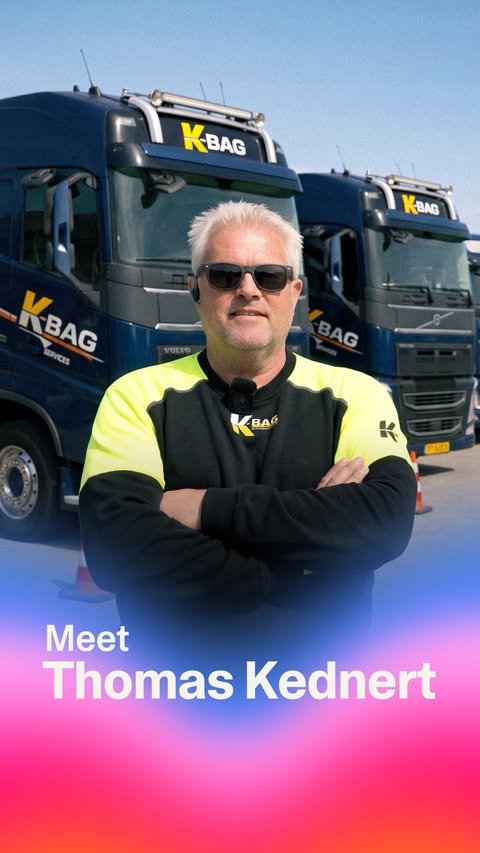
Its official Instagram account profiled a trucking founder who used Lovable to build routing software, reduce inefficient loads, improve economics, and expand his operation. The product did not appear until the business problem and protagonist were established.
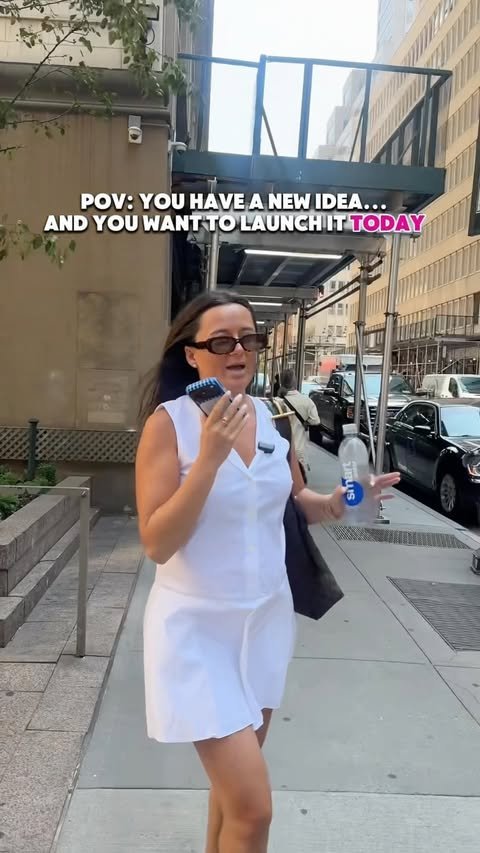
A creator partnership used the hook “POV: you have a new idea…and you want to launch it today,” then demonstrated a live workshop landing page. The emotional promise was not “no-code.” It was avoiding the delay between inspiration and execution.
On TikTok, @ugc.smoove used a more aggressive side-hustle position: build websites for local businesses, charge for them, and use Lovable to fulfill the work. The brand did not appear until after the money-making premise had already earned attention.

The comments were dominated by viewers requesting the promised prompt, confirming that the keyword CTA generated intent—not just passive reactions. The larger pattern, however, is uneven: this account repeatedly posted near-identical Lovable claims, while one post substantially outperformed the rest. Brands should copy the specific opportunity plus working proof, not assume repetition alone created the result.
Lovable also launched a formal partner program for freelancers and agencies. That extends its position from a tool people use to a credentialed commercial ecosystem people can build careers around.

Replit: Making Is Play, Not Just Software Development
Replit’s official Instagram content is lighter and more playful than the “build a startup” messaging common in this category. One reel built a lunch roulette app connected to Uber Eats, then completed the story by eating the selected item.
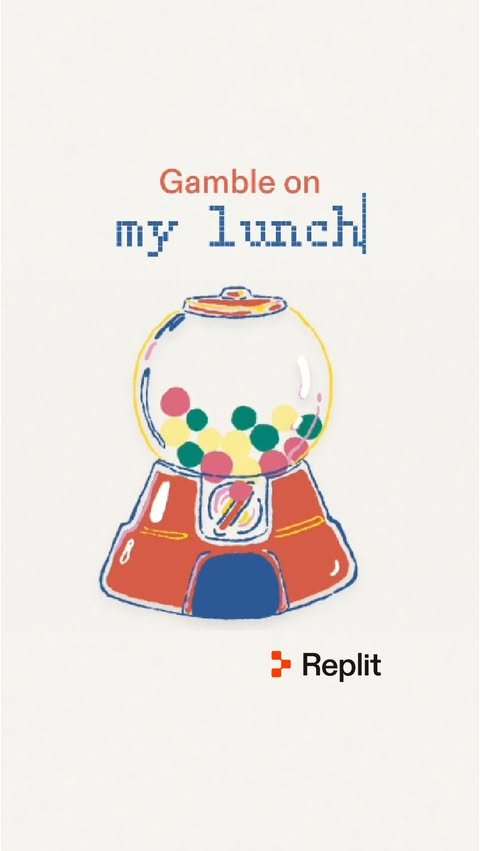
The hook—“Gamble on my lunch with me”—is important. It sells curiosity and participation before explaining the underlying agent. The app is small, personal, slightly absurd, and visibly functional. This makes AI coding approachable without repeatedly saying “anyone can code.”
Replit also used a memorable chef analogy to explain automatic model routing, turning a technical cost-and-efficiency feature into a consumer-comprehensible distinction between assigning simple and complex tasks.

Its more conventional feature roundup was clear but less culturally distinctive: three updates, interface footage, then “go build something.”
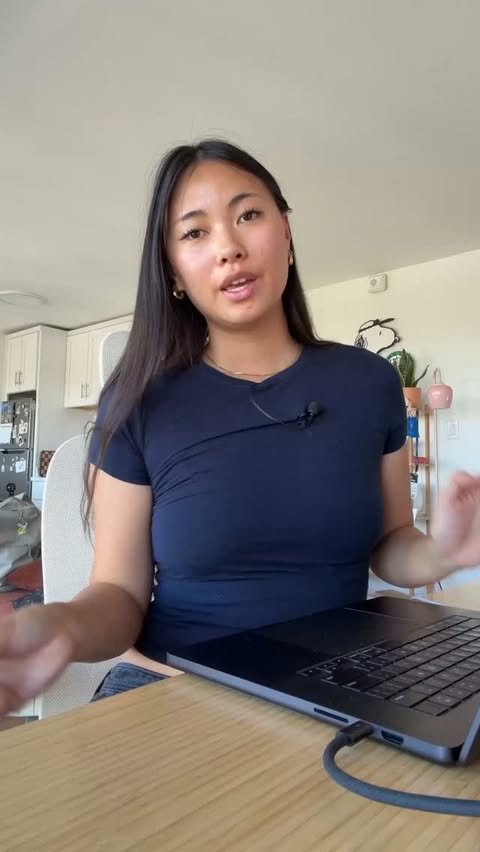
A newly posted student partnership translated Replit into another identity: the organized university student. Instead of juggling multiple productivity apps, the creator built a customized study hub with no coding.

This post was still too new and too small to call a proven winner, but the strategic fit is strong: it moves Replit outside developer TikTok and into StudyTok through a native personal problem.
Base44: “I Had a Problem, So I Built an App”
Base44’s positioning is the purest expression of nontechnical agency. Its best partner example opened with a social role rather than technology: “I got tired of being the designated mom friend of the group, so I built an app.”

The creator then showed a working group-planning product with proposals, voting, calendar syncing, and photo recaps. The useful detail is that the app was not another generic startup concept. It externalized a burden the creator’s audience could recognize immediately.
Base44’s official account used a parody news broadcast to announce that a nontechnical adult had shipped an app. It combined a comedic wrapper with actual prompt and interface proof.

A second official reel moved upmarket by showing an agency owner whose Superagent identified a lead and helped close a deal.

Together, these posts create a useful ladder: build something personal, then build something commercially consequential.
Superhuman: Replace the Administrative Layer of Work
Superhuman ran the most visible coordinated creator push in the sample. Its position has expanded from fast email to an ambient assistant operating across documents, inboxes, calendars, project tools, and browser tabs.
The creators were selected around distinct professional contexts:
- A full-time creator showed Superhuman Go converting academic reading into a video script.
- Former Meta engineer and AI automation operator Ray Fu showed it extracting terms from a long brand-contract email thread.
- A corporate-comedy creator dramatized losing a weekend to manual scheduling before showing Superhuman handling the task.


The comedy-led execution reached much farther than the straightforward partner tutorials, although its engagement relative to reach was modest. That makes it excellent distribution evidence, but weaker proof of deep enthusiasm.
Superhuman’s own short UI post took the opposite approach: no presenter and almost no setup—just a document request being improved with context retrieved from a connected call source.

The brand’s most defensible message is not “AI makes you productive.” It is: AI should absorb the low-value coordination surrounding your actual expertise.
Gamma: Make the Product a Prop in Workplace Drama
Gamma’s creator network was unusually recognizable. Several small accounts use names built around presenting, identify themselves as Gamma ambassadors, and publish variations of corporate or student presentation content.
The week’s notable format barely demonstrated the software. A creator described management commissioning a morale study, only for an employee to respond with a devastating Gamma deck. Another described an employee making a deck about why she did not answer Slack at midnight.


This is not conventional product education. Gamma becomes a culturally understood noun—“a Gamma deck”—inside a satisfying retaliation fantasy. The surrounding corporate-story format was one of the hottest patterns in the broader TikTok sample, materially outperforming generic AI workflow and productivity-demo neighborhoods.
The risk is weak product comprehension: neither reel showed the interface or output. Gamma should pair these entertainment posts with profile-level retargeting content that demonstrates how to recreate the fictional deck.
Claude: Community Culture Is Doing More Work Than Product Marketing
Claude’s strongest visibility this week came from independent users, not a clearly coordinated Anthropic campaign.
One technical creator opened with a concrete authority cue—an extension with a large GitHub following—and explained how it makes Claude Code write less code. Another presented a rapid security checklist for vibe-coded websites.


The largest Claude-native cultural moment was an insider meme: “bro Claude limits reset,” followed by a group rushing back to their computers.

This worked because users already understand the ritual and frustration. The comments also showed skepticism toward “vibe coders” and AI performance theater, so the reach should not be mistaken for uniformly positive brand sentiment.
Claude currently benefits from being a subculture with recurring jokes, rituals, tools, and frustrations. That cultural density is difficult for a polished brand account to manufacture directly.
Wispr Flow and Granola: Own a Specific Moment of Friction
Wispr Flow secured broad-reach credibility through a Today Show segment framed around testing many back-to-school apps. The presenter explicitly said she partnered with the company, then demonstrated dictation, filler-word removal, and cross-device use.

Its position is concrete and comparative: speech becomes polished writing faster than typing. The proof is immediately understandable even to people who do not follow AI.
Granola had less evidence of a coordinated brand-led campaign during the window. A recent Hinglish explainer used a strong meeting dilemma—take notes and miss the discussion, or listen and miss the notes—before positioning Granola as the bot-free solution.

That is directionally effective, but it came from a general AI-tool education series rather than a confirmed Granola partnership. Granola’s opportunity is to move from “AI meeting notes” toward the more emotionally resonant outcome: being fully present without losing the record.
Cursor, Linear, Raycast, Arc/Dia, and Perplexity: Visibility Did Not Equal Active Promotion
Search volume produced many false positives for these names, so brand attribution matters:
- Cursor appeared throughout developer discovery content, but the strongest recent examples were independent coding posts rather than a visible official or partner-led campaign.
- Linear searches were heavily polluted by unrelated uses of “linear” and fan content. There was insufficient verified campaign evidence to characterize a current seven-day playbook.
- Raycast had no strong in-window official campaign in the inspected account feed; its latest relevant collaboration was outside the requested period.
- Arc/Dia had meaningful browser discussion, but several high-reach search results were unrelated websites or generic Claude content. This was organic category attention, not reliable evidence of brand promotion.
- Perplexity maintained a polished official presence, but its recent inspected product reel fell just outside the seven-day window. Current-week search results were comparatively thin.
The absence of verified activity is itself strategically relevant. While Superhuman, Replit, Lovable, Base44, and Notion were actively shaping narratives this week, several iconic prosumer brands were largely allowing educators and users to define them.
The Hook Formats Working Now
1. A Specific Human Problem Before the Product
The strongest demonstrations opened on situations such as:
- Being the friend who organizes everything.
- Having an idea that needs to launch today.
- Losing a weekend to scheduling.
- Missing a meeting while trying to document it.
- Not knowing what to eat for lunch.
This structure makes the product the resolution, not the premise. It is more credible than opening with “This AI tool will save you hours,” a hook family that was common but not meaningfully differentiated in the broader sample.
2. Entertainment With the Brand Buried Inside
Gamma’s workplace stories and Claude’s limits meme show the upside of delaying or even minimizing the product explanation. These posts reward viewers who never intend to buy while reinforcing recognition among those who do.
The broader corporate-story cohort was substantially hotter than generic productivity demonstrations. The more specific winning slice was not merely “workplace humor”; it was an absurd rule, a satisfying act of employee resistance, and software used as the instrument of retaliation.
3. Finished Outcome Plus Mechanism
The best builder content showed both sides:
- A live landing page and the prompt that generated it.
- A study hub and the scattered apps it replaced.
- A logistics product and the business change it enabled.
- A lunch selector and the meal it ultimately chose.
Outcome without mechanism looks fabricated. Mechanism without outcome feels like a tutorial. The combination creates belief.
4. Unexpected Analogies for Technical Features
Replit’s Michelin-chef analogy made model routing understandable without benchmarks or jargon. This format is especially useful for prosumer products whose strongest differentiators are technically meaningful but visually dull.
5. Insider Memes About Product Constraints
Usage limits, token consumption, prompt rituals, and vibe-coding failure modes are becoming source material. The surrounding insider-meme cohort was both fresher and stronger than generic AI workflow content.
These memes signal that a product has moved from utility to culture. They work best when the joke is recognizable without explaining it; a brand forcing the language too early would likely feel inauthentic.
6. Comment Keywords as Distribution and Lead Capture
“Comment prompt,” “comment design,” and similar CTAs appeared across Lovable and Genspark creator content. In the Lovable example, the sampled comments were overwhelmingly the requested keyword.
This tactic works when the promised asset is a natural continuation of the video—a prompt, template, walkthrough, or live example. It is less persuasive when the keyword merely unlocks a generic affiliate link.
Who These Brands Are Partnering With
The creator mix is fragmenting by the job the brand needs done:
Professional archetypes
Superhuman uses creators whose actual work generates visible administrative complexity: content research, software engineering, agency operations, and corporate scheduling.
Native lifestyle communities
Replit is reaching students through aesthetic StudyTok content. Base44 uses a socially organized young creator rather than a generic coding influencer.
Commercial-opportunity educators
Lovable partners with creators who frame websites as a side hustle or client service. This makes purchase intent economic rather than purely creative.
Category specialists
Gamma’s ambassador accounts revolve around presentations, slides, and school/work scenarios. Their small size matters less than contextual consistency.
Authority and media partners
Wispr Flow used broadcast credibility. Notion used founders and operating professionals. These collaborations sacrifice some native informality in exchange for trust.
Independent technical educators
Claude and Cursor benefit from educators who can interpret plugins, benchmarks, prompts, and workflows. These creators often create stronger credibility than official brand explainers, but brands have less control over the narrative.
Five New Trends in AI Prosumer Marketing
AI Is Becoming the Invisible Supporting Character
The most culturally fluent posts are no longer impressed by AI itself. AI appears midway through the story as the thing that made the outcome possible.
“No Code” Is Being Replaced by “I Made This for My Life”
The next phase of app-builder marketing is not abstract democratization. It is extremely specific personal software: a friend-group planner, study hub, lunch roulette, client-routing system, or workshop page.
Brands Are Building Creator Economies, Not Just Affiliate Rosters
Lovable’s certification and directory turn creators and agencies into service providers. Gamma’s presentation-focused ambassadors similarly create a recognizable content network. The creator does not merely refer users; they gain a professional identity tied to the platform.
Workplace Comedy Is Becoming a Product-Education Funnel
Corporate absurdity creates reach; the profile, pinned comment, or follow-up tutorial can deliver education. Gamma currently demonstrates the reach half especially well. Superhuman combines the comedy and workflow in one execution.
AI Skepticism Is Now Part of the Culture
Comments around Claude memes included both recognition and ridicule. Effective brands should not respond by making grander claims. They should show smaller, verifiable outcomes and acknowledge failure modes with humor.
What AI Prosumer Brands Should Do Next
1. Choose a human role before a feature. Build campaigns around the overextended operator, idea-rich creator, nontechnical organizer, or specialist drowning in coordination.
2. Commission personal software, not generic demos. Ask each creator to build something only they would think to build.
3. Require visible proof. Show the input, the resulting artifact, and one moment where it actually works in the real world.
4. Separate reach content from explanation content. Use workplace stories and memes for discovery, then demos and case studies for conversion.
5. Recruit by contextual credibility. A student with a real study system can sell Replit more naturally than a broad AI-news page. An operator with a crowded inbox can sell Superhuman better than a lifestyle influencer.
6. Let creators delay the brand reveal. The product should often enter after the audience understands the stakes.
7. Use comment keywords only for genuinely useful assets. Prompts, templates, and walkthroughs strengthen the original story; empty lead magnets erode trust.
8. Treat community jokes as health signals, not scripts to copy verbatim. Participate lightly and amplify users rather than manufacturing insider language from the brand account.
Bottom Line
The week’s strongest AI prosumer marketing did not sell intelligence. It sold agency with evidence: the ability to make, decide, organize, or respond without waiting on another person or wrestling with administrative work.
The brands separating themselves are translating software into stories consumers already care about. Lovable and Base44 make ideas tangible. Replit makes creation playful. Superhuman removes work around the work. Notion gives serious operators a system. Gamma and Claude show what happens when a tool becomes part of internet culture.
This review covers public TikTok and Instagram posts surfaced from September 5–12, 2026. Instagram search can be inconsistent, so current official account feeds and verified media were weighted more heavily; unverified search matches were excluded rather than treated as campaigns.


