What Influencer-Brand Collabs Are Working on TikTok in 2026

> Over the past seven days, the strongest influencer-brand collaborations made the partnership unmistakable but the content familiar: relatable memes, useful transformations, candid access and character-led entertainment beat conventional endorsements. Creator-format fit mattered more than production polish, while brand trips, ambassador reveals and celebrity campaigns worked when audiences could celebrate the creator—not merely admire the product.
The influencer collaborations winning right now
This review covers public TikTok and Instagram posts published from September 5–12, 2026. Engagement rate is likes divided by views; it indicates resonance, not sales. Instagram likes and views are unavailable for some posts, so the engagement ranking below includes only collaborations with both metrics visible.
The clearest pattern is format continuity. Winning creators did not interrupt their feeds to perform an advertisement. They inserted the brand into the exact meme, project, routine, milestone or character their audience already expected.
Highest-engagement verified pairings
1. @ama_kwakyewaa1 × Yah! Ice Cream
19.6% engagement
The strongest verified ambassador announcement in the seven-day sample.

The creator announces the ambassadorship inside a Yah! location, tastes the product, signs branded paperwork and explicitly says she is the new ambassador. It is highly commercial, but the audience treats the appointment as her personal achievement: the sampled comments are dominated by congratulations, pride and “you deserve this” reactions.
That is the important distinction. The emotional object is the creator’s progress, while the brand becomes the institution validating that progress. The pairing also feels locally grounded rather than arbitrarily bolted onto a celebrity.
2. @maggiepoulsen × BEKKA
18.6% engagement
A six-second friendship joke doubles as an almost invisible outfit placement.

19.4% engagement
The repeat collaboration confirms this is a scalable sponsored series, not a one-off.

This was the standout integrated-partnership model. @maggiepoulsen posts short street-walk clips with relatable text about adult friendships or “girlhood”; the outfit is worn but never explained, and disclosure plus the brand tag sits in the caption.
The audience discusses the joke first and the clothes second. In the sampled comments on the biggest post, nearly every top response shares a friendship-scheduling story; only one sampled response calls out the outfit. That means the sponsorship preserved the post’s social function rather than replacing it with product talk.
The repeatability is especially valuable. The same template worked across multiple BEKKA posts and transferred to Edikted without changing the creator’s tone.
22.4% engagement
The same relationship-text format also worked with Edikted.

3. Desigual × Vivian Jenna Wilson
13.2% engagement
Public persona, provocative casting and meme-native execution created cultural conversation.

Desigual cast Vivian Jenna Wilson in bold styling and paired her dramatic hair flips with a humorous long-hair monologue rather than a conventional fashion voiceover. The brand is not explained inside the clip; the official account and caption provide the campaign context.
The casting itself carries the idea. Audience responses praise Vivian as an icon and explicitly celebrate brands willing to hire her. Third-party commentary then amplified the campaign far beyond the official post, framing it through her relationship with Elon Musk.

This is a useful model for brands with the appetite for cultural tension: cast someone whose biography adds meaning to the creative, then make the execution simple enough to remix. It is less controllable than routine UGC, but its earned-media ceiling is much higher.
4. @sophadophaa × Apple
12.5% engagement
A candid arrival vlog turned exclusive access into a creator milestone.

The creator opens in a hotel hallway, visibly stunned that she is on an Apple brand trip, then gives a casual room tour and invites followers to come along for the product launch. No polished itinerary montage is needed; disbelief is the hook.
Comments focus on her ascent—“made the right girl famous,” “supported this queen from the beginning,” and “you deserve this”—rather than Apple specifications. This is the brand-trip equivalent of the Yah! ambassador announcement: access works when followers interpret it as a win for someone they helped elevate.
The disclosure communicates that Apple invited her on a brand trip, but it does not clarify compensation or which expenses were covered. Brands should add that detail in the caption without flattening the candid opening.
5. @sashalusslover × Cal AI
10.7% engagement
The app appears briefly as a tool inside an established food diary.

Cal AI enters midway through a “what I eat in a day” montage. The creator photographs her meal and shows the app returning calories and macros, then continues the food diary. The app has a real job inside the story rather than becoming the story.
The post includes the brand tag and creator code in the caption, but the video itself has no visible ad disclosure. That is commercially legible but not disclosure-best-practice. The repeat format also appears on Instagram, although the surfaced Instagram version was older and therefore excluded from this week’s ranking.
6. @jackkinsey_ × B&Q
9.0% engagement
A surprising rug-to-headboard transformation makes the sponsor materially necessary.

This is the strongest utility-led integration. The creator immediately asks whether a rug can become a headboard, sources materials from B&Q, completes several related DIY projects and reveals the finished room. The sponsor supplies the means to resolve a genuine creative problem.
The comments validate the content value: viewers debate paint colors, suggest improvements, compare family décor traditions and praise the creator’s vision. The closing color vote gives people something more meaningful to discuss than whether they would buy the product.
7. Dior × A24 × Sabrina Carpenter
8.5% engagement
The best-performing Dior/A24 character vignette centers Sabrina’s comic persona.

The Dior/A24 partnership behaves more like entertainment IP than influencer advertising. Sabrina Carpenter performs a brief, playful studio-set character beat in a co-branded shirt, ending with a Dior/A24 lockup rather than a sales message.
Its engagement exceeded the full ensemble film and every other individual vignette in the observed series. Drew Starkey’s deadpan rehearsal clip was another strong variation, showing that each celebrity received a distinct character rather than identical campaign blocking.
6.7% engagement
Drew Starkey brings a slower, art-house rehearsal tone to the same partnership.
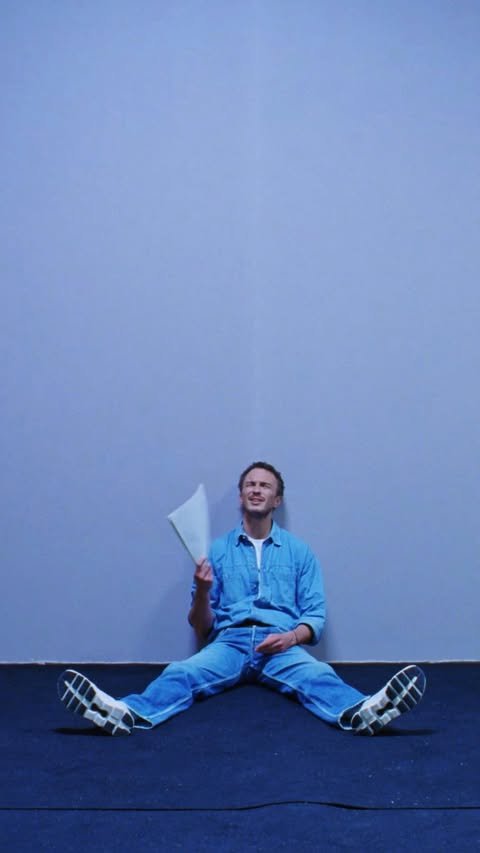
3.4% engagement
The full film builds the world, while shorter talent cuts deliver sharper entry points.

The campaign’s strength is not simply celebrity scale. Dior and A24 created a premise—actors absurdly preparing to embody a designer—and let every participant interpret it through their own screen persona.
8. @cameronbrink22 × Aveeno
7.7% engagement
Pregame confidence gives body care a credible role in an athlete’s routine.

Cameron Brink moves between arena tunnel footage and casual skincare preparation, applying Aveeno lotion and body oil before returning to the confidence theme. The caption uses #AveenoPartner, while the video names the collection but does not display a separate #ad overlay.
The athlete-product fit is credible because the routine connects exposed skin, game-day presentation and confidence. However, sampled comments center Cameron and basketball much more than skincare. This is strong affinity content, but weaker evidence of product-specific conversation.
What the winning formats have in common
Relatable entertainment with passive product placement
Maggie Poulsen’s fashion posts are the clearest example. The brand gets continuous wardrobe visibility while the viewer receives a highly shareable friendship or relationship joke. The product does not have to interrupt the entertainment because wearing it is the demonstration.
This format is best for visually legible categories—fashion, accessories and beauty—where the audience can understand the product without explanation.
Transformation with the sponsor inside the mechanism
The B&Q integration works differently. Product visibility alone would not be enough; the creator uses materials to solve a surprising design challenge and proves the result. This aligns with a broader recent pattern in which concrete before-and-after integrations outperform conventional standalone praise.
The practical rule is: do not sponsor the introduction; sponsor the solution.
Milestone framing
Apple and Yah! Ice Cream both benefit from the creator’s emotional arc. One creator cannot believe she has been invited to Apple; another formally signs and announces an ambassadorship. Followers respond as supporters witnessing career progress.
This works especially well with rising creators whose audiences remember the earlier stages of their journey. A large celebrity can supply awareness, but a developing creator can supply communal pride.
Existing routines with one credible product action
Cal AI logs a meal inside a food diary. Aveeno appears inside a game-day confidence ritual. The best routine integrations give the product one specific, observable task rather than asking it to carry an entire lifestyle narrative.
This also protects authenticity: the audience sees how the product fits, not just why the creator says they like it.
Character-led, co-branded entertainment
Dior/A24 shows the premium version. The partnership is the creative premise, but the films still belong to the talent. Sabrina is playful and poised; Drew is deadpan and awkward. A campaign world connects the series without forcing every participant into the same performance.
Cultural casting that generates earned distribution
Desigual demonstrates that a creator or public figure can be more than media inventory. Vivian Jenna Wilson’s public story changes how audiences interpret the brand’s “Born to Disobey” positioning, encouraging commentary accounts and news publishers to redistribute the campaign through their own lenses.
Disclosure approaches: what worked and what needs tightening
Strongest: plain-language relationship disclosure
The Yah! Ice Cream post verbally names the creator as the new ambassador and reinforces it with contract-signing imagery. Prada’s Namtan Tipnaree announcement similarly states the ambassador relationship in the caption, although the clip itself functions as a polished fashion introduction rather than a personal endorsement.

Dior/A24 also makes the collaboration explicit through its joint end card and caption language. Because the post is published by Dior, it is clearly brand-originated content rather than an independent recommendation.
Effective but caption-dependent: “ad” before the creative copy
@jackkinsey_, @maggiepoulsen and @tamara place ad or AD at the beginning of their captions. This is direct and difficult to misread, even when the video itself stays completely native.
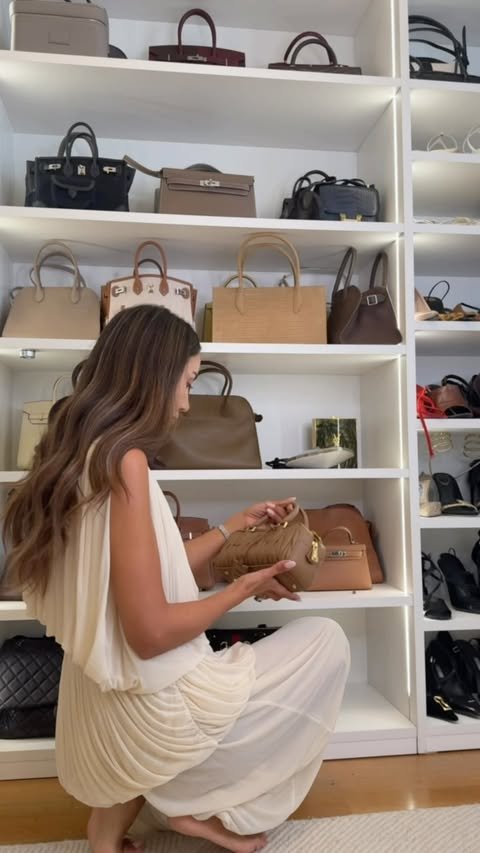
The weakness is visibility: viewers encountering reposts, embeds or cropped clips may never see the caption. A small opening Ad label would make the relationship portable without requiring a spoken disclaimer.
Relationship-specific hashtags
#AveenoPartner is more informative than a generic brand tag because it signals a commercial relationship. It is still less universally clear than #ad, especially for viewers unfamiliar with partner-language conventions.
Best practice is to combine the two: “Ad | Aveeno partner”, placed before descriptive copy.
Access disclosure without compensation clarity
“I’m on a brand trip with Apple” clearly explains why the creator is present, but not whether travel, lodging or content were paid. Brand-trip captions should specify “invited and hosted by,” “travel and accommodation gifted,” or “paid partnership,” as applicable.
Weakest: promo code or product tag without #ad
The Cal AI integration includes a code and brand tag but no visible sponsorship declaration in the video. A code can imply an affiliate relationship, but implication is not clear disclosure. Likewise, a tag alone may indicate organic usage, gifting, affiliation or payment.
What makes an integration feel authentic
The format predates the sponsor. @maggiepoulsen’s sponsored clips look like one continuous series, and @jackkinsey_ remains a DIY problem-solver rather than becoming a retail presenter.
The product earns its screen time. Cal AI calculates a meal; B&Q materials become a headboard; Aveeno completes a pregame routine. Each brand performs a visible function.
The creator retains a recognizable voice. Apple allows disbelief and messy arrival energy. Dior/A24 assigns characters instead of supplying uniform talking points. Birra Moretti lets Stanley Tucci parody the idea of filming a commercial by sending casual lunch footage instead.

The audience has a non-commercial reason to respond. They can relate to delayed friendship plans, vote on paint, celebrate a creator milestone or react to a celebrity performance.
The pairing has an immediate logic. Stanley Tucci and Italian dining culture, Cameron Brink and game-day body confidence, Sabrina Carpenter and witty fashion performance, or a food-diary creator and a meal-tracking app all require little explanatory setup.
Formats that looked weaker this week
Conventional standalone endorsement
Across the broader recent TikTok comparison, direct product-praise posts were weaker than transformation and entertainment-led integrations. Naming a sponsor immediately was not inherently harmful, but praise without a story, test or transformation gave viewers little reason to stay.
Generic brand-trip montages
Brand trips as a category were not automatic winners. The Apple example works because the creator’s disbelief and personal ascent are the story. Searches also surfaced many ordinary travel videos, jokes about brand trips and even self-funded trips described with brand-trip language.
Brands should not treat destination luxury as the concept. Access must unlock a story, reveal or creator milestone.
Polished ambassador films without creator stakes
Prada’s Namtan announcement achieved substantial reach but lower engagement than the smaller Yah! Ice Cream partnership. The contrast is instructive: pristine styling introduces the ambassador, while explicit emotion and career progression invite the audience to participate.
Product integration with unclear disclosure
Native execution can protect engagement, but “native” should not mean concealed. Cal AI demonstrates how a useful integration can still leave the commercial relationship ambiguous. Authenticity comes from creative fit, not from making viewers decode whether money changed hands.
Reach without resonance
Ashley Graham’s Muse by Meta integration reached a very large audience but produced comparatively little like engagement. The product was demonstrated through real scheduling, shopping and family tasks, yet the polished sit-down explanation felt more like a product presentation than a familiar Ashley Graham content format.
0.2% engagement
Large distribution did not translate into strong observable resonance.

That does not prove the collaboration failed commercially; paid distribution, clicks or conversions could tell a different story. It does show why reach alone should not determine which creative model gets repeated.
A practical collaboration playbook for brands
For sponsored posts
1. Start with an existing creator series, not a campaign message.
2. Give the product one visible job.
3. Put Ad at the start of the caption and add an unobtrusive opening label.
4. End with a content-native prompt—vote, opinion, prediction or personal story—not simply “shop now.”
For integrated partnerships
Commission a sequence rather than a single post. Maggie Poulsen’s repeated outfit-meme structure demonstrates how one creator-owned format can accommodate several products while retaining audience familiarity.
Keep the non-commercial value consistent across episodes. If the joke, tutorial or routine weakens whenever the sponsor appears, the format is not truly integrated.
For ambassador programs
Make the appointment a story. Film the creator entering the location, meeting the team, signing, testing the product or explaining why the relationship represents progress. Then follow the announcement with recurring usage content; a ceremonial launch alone cannot establish credibility.
For brand trips
Lead with access or emotion immediately: where the creator is, why the invitation matters and what followers will see that they could not normally access. State exactly what the brand hosted or paid for.
Avoid interchangeable airport-room-dinner montages. The creator needs an assignment, reveal, challenge or point of view.
For founder-creator collaborations
Put the founder and creator around a real decision: formulation, design trade-off, audience feedback or launch strategy. Founder-led content also works when the founder exposes genuine operating details rather than performing generic inspiration.
@brittney_saunders’ FAYT post is a strong adjacent example: she opens the actual advertising dashboard, explains the test and asks viewers whether they want the results. It is self-owned rather than an external influencer collaboration, but the transparency is the transferable lesson.

For co-branded products
Give the collaboration its own entertainment system. Dior/A24 built a cast, recurring premise, individual character cuts and a longer ensemble film. The product or logo becomes connective tissue rather than the entire plot.
Creator-designed merchandise launches were comparatively thin in the verified seven-day sample, so there is not enough current evidence to name a winning creator-product launch formula with confidence. Brands should not substitute older collection launches just to fill that category.
Bottom line
The week’s best collaborations did not hide the commercial relationship; they hid the creative disruption. Clear caption disclosures coexisted with jokes, transformations, routines, milestones and character performances that would still make sense on the creator’s feed without a sponsor.
The most defensible strategy is therefore not “make the ad look organic.” It is: buy into a creator behavior audiences already value, give the product a necessary role, and disclose the relationship before asking the viewer to care.


